Know when your service goes down before your users do
HTTP health checks from 9 global regions. Monitor any URL with customizable intervals from 1 to 60 minutes.
Global Regions
Check Intervals
Health Checks
Data Retention
Everything you need
A closer look at what you get, from the first check to the alert that reaches you.
Global coverage
Monitor from Africa, APAC, Eastern/Western Europe, the Middle East, Oceania, and the Americas.
Flexible intervals
Check every minute for critical services, or every hour for less urgent endpoints.
Status code validation
Expect any HTTP status code — 200, 201, 301, 404 — whatever is correct for you.
Instant results
Run any monitor on demand to test immediately after changes.
Uptime history
See service health at a glance: the last 90 days of daily uptime, colored by each day's success rate.
365-day retention
Daily results are kept for a full year, with the most recent 90 days charted per monitor.
How it works
Three steps from an empty dashboard to checks that run on their own.
Create your monitor
Point Uptime at the URL, domain, port, or scheduled job you want to track.
Choose how you're alerted
Connect email, Slack, Discord, or a webhook. Set cooldowns to avoid alert fatigue.
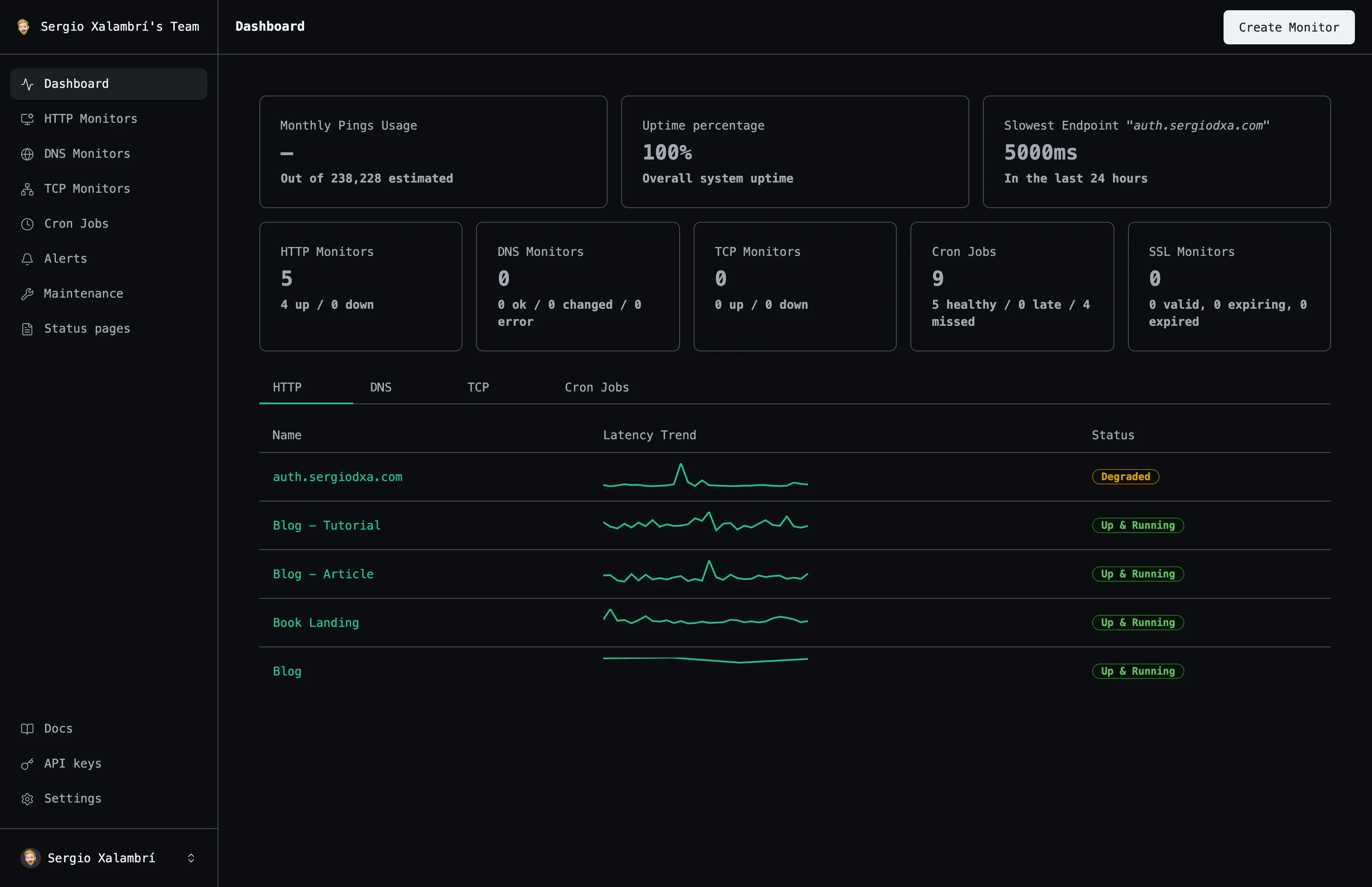
Watch the dashboard
See uptime history, response times, and status update as checks run automatically.
Frequently asked questions
The questions people ask most before they start monitoring.
What types of URLs can I monitor?
Any publicly accessible HTTP or HTTPS URL: websites, APIs, webhooks, health check endpoints.
How do I choose a monitoring region?
Select the region closest to your users or where you want to measure performance from.
Can I monitor authenticated endpoints?
Yes, you can add custom headers including Authorization tokens.
How quickly am I notified of failures?
Within seconds of a failed check. Configure email, Slack, Discord, or webhook alerts.
Start monitoring your services
Create your first monitor in under 2 minutes. No credit card required to start.